
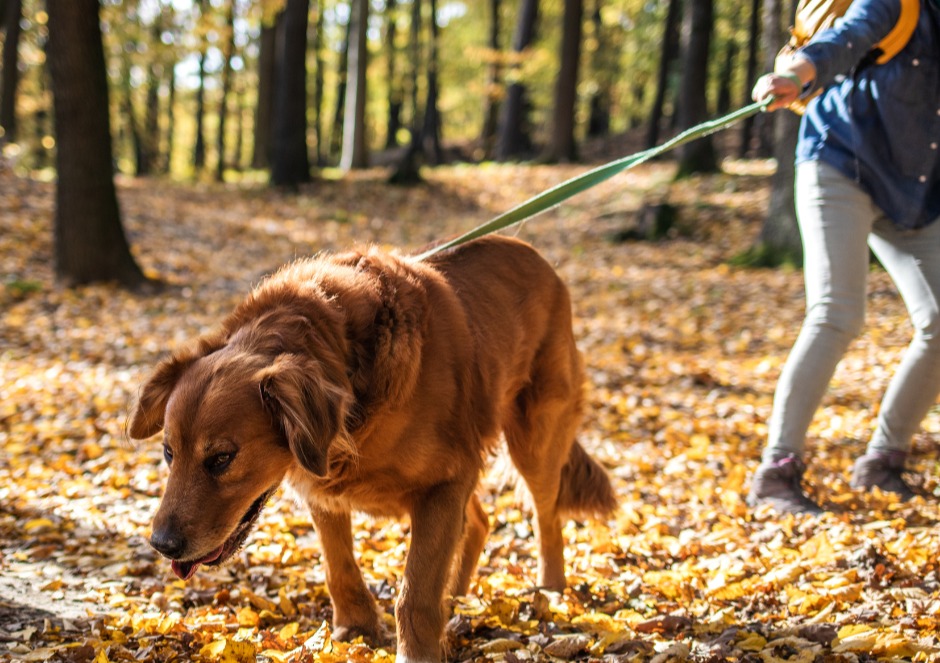
Walking a dog can be a wonderful experience for both the owner and their furry friend. It provides physical and mental stimulation, and an opportunity to strengthen the human-canine bond. However, for many dog owners, the idyllic image of a peaceful walk often turns into a frustrating battle of tug-of-war. If you’ve ever been taken for a walk by your dog instead of the other way around, you know the struggle. Believe it or not, many of us inadvertently contribute to our dogs’ pulling behaviour. In this blog post, we will delve into the common mistakes dog owners make that inadvertently teach their dogs to pull on the leash and how to rectify these behaviours.
How You Are Accidentally Teaching Your Dog to Pull on Lead
1. Expecting That Your Puppy Will Automatically Know How to Walk on Lead
Did you know that it is only really in the past 150 years or so that we have brought dogs into our houses to live as they do now? Before that, many dogs were community dogs, street dogs, or farm dogs, and most were not walked in the controlled manner that they are today, but were kept off lead and often strayed where they wanted. As a result, walking on the lead calmly next to us is something pretty new in the dog world and not something that comes naturally to most dogs. As a result, we need to teach our dogs how to walk next to us politely, and we can start doing this from the first time that we take our puppies out.
2. Setting Goals for Distance/Time Instead of Focusing on a Good Quality Walk
For most dog owners, taking their puppy for their first walk is a really exciting time. You’ve dreamed about how amazing it is going to be, and now it’s finally here! So you focus on taking the puppy out for 5 minutes, or around the block, etc., and off you go. Unfortunately, at this point, your puppy doesn’t know how to walk, and you often end up leaving the house with an overexcited pup who is pulling you out the door, down the drive, and following his nose and eyes as you walk, rather than focusing on you. Focusing on getting the first step right before moving on to the next steps can make a big difference here.
3. Showing Your Dog That Pulling Gets Them Where They Want to Go.
When we take our dogs for a walk, oftentimes our dog will pull and as they do, we tend to pull back so they aren’t going too fast, but we allow them to get to where they want to go. This teaches your dog that when they want to get somewhere, if they pull you in that direction, they are likely to be successful, so it actually rewards the pulling behaviour. As the puppy grows, we start expecting more of them, and we start pulling back harder. Our dog counters and also pulls forward harder, and we often move forward with them. This teaches your dog to pull even harder to get to where they want to go.
4. Taking New Puppies for Their First Walks to Exercise Them
There’s an old adage that a tired dog is a good dog. A mistake that many people make is taking their puppy out for the first time when they are full of energy. The world is such an interesting place, with new sights, smells, and sounds, which leaves plenty of room for your puppy to make mistakes as they set out to explore their new surroundings.
5. Not Rewarding Good Behaviour
One of the easiest ways to reinforce the behaviours that you want is to reward it with food. Rather than using treats, we suggest taking your puppy out when they are hungry and using a portion of their daily kibble quota to reward them for walking in the correct position and keeping them focused on you. You can also take tastier treats out for distractions, so when you see a dog or child coming your way, use a bit of cheese or chicken to keep your pup’s attention on you. Make sure that you are consistently rewarding the behaviours that you like. We have a saying in dog training that practice makes permanent. Make sure that you are encouraging your dog to practice good behaviours by reinforcing these, and eventually they will become ha abit.
6. Inconsistency
Puppies, as adorable and endearing as they can be, can also be extremely frustrating. They can be all over the place and inconsistent, which can make us frustrated and can cause us to just ‘go along with the pulling this time’, or not redirecting your puppy when they are barking at another dog this time, because they always do it. Being inconsistent in your training is a surefire way to confuse your dog, accidentally reinforce the wrong thing and potentially build bad habits. You create the dog that you reinforce. Make sure that you are consistently reinforcing good habits and redirecting negative behaviour into more positive outlets.
7. Starting Too Late
Puppyhood is the prime time for instilling good habits. If leash training isn’t introduced early on, or if a puppy is allowed to pull because they’re “just a baby” and it’s “cute,” it can be much harder to rectify the behaviour when they’re older and stronger.
All dogs can learn to walk on a lead or harness without pulling, but focus should be given on teaching them to do so before long walks are tried.
In conclusion, leash pulling can be frustrating, but understanding how we might inadvertently contribute to the behavior is the first step in addressing it. Remember, dogs are constantly learning from their environment and our reactions, so be mindful of the messages you’re sending during your walks. With proper training, communication, and positive reinforcement, you can help your dog overcome their pulling tendencies and enjoy the benefits of a well-mannered walk.
If you’re based in Cork and want hands-on guidance, explore:
• Puppy Training Classes
• Obedience Training
• Behaviour Consultations
Ready to see real change in your dog?
Book a free 15-minute call – no commitment, just a conversation about your dog.
No spam. No mailing lists. Just a callback regarding your dog. We respect your privacy and never share your details. You should hear back from us within 24 hours.